Image Spacer for correct size distribution.
Clerk of the Circuit Court of Cook County, Illinois
Help |
SYSTRAN is the leading provider of the world's most scalable and modular translation architecture.
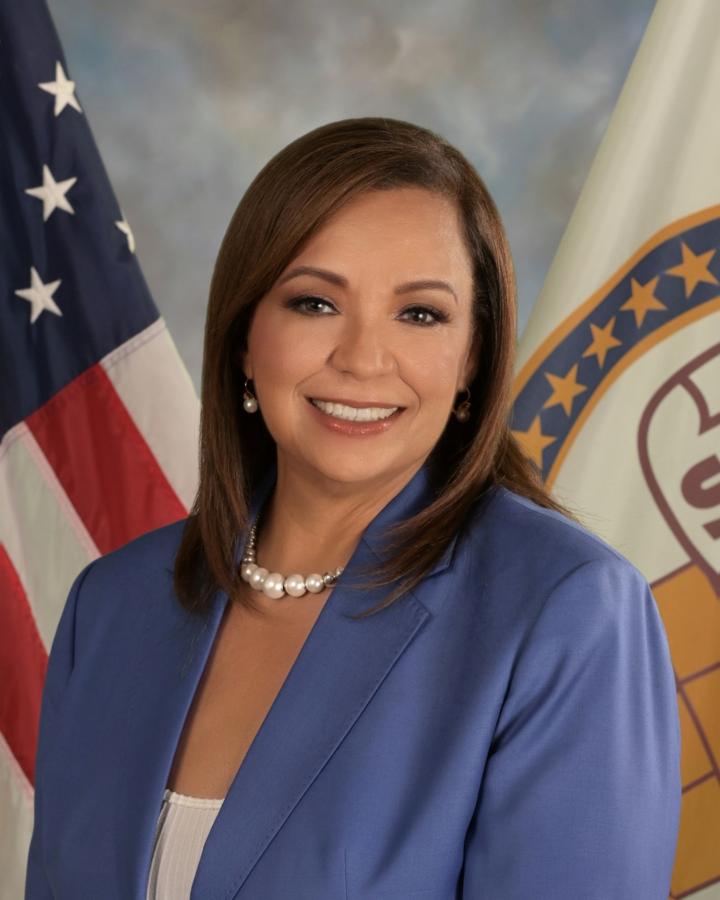
Official image of Clerk Dorothy Brown
Divorces

Alimony

Legal Separations

Orders of Protection

Divorce Decrees
Domestic Relations Division

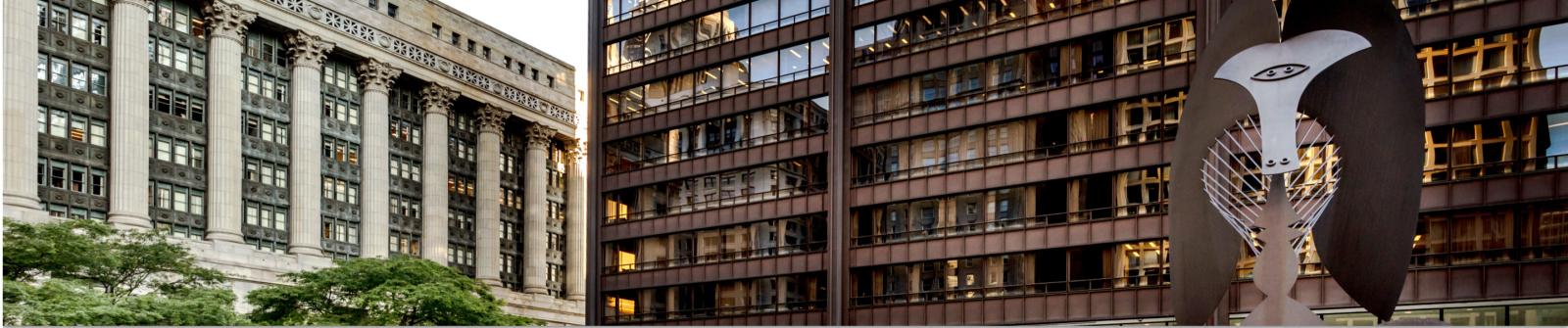
Building Name
Richard J. Daley Center
 
Address
50 West Washington Street
Room 802
Chicago , IL 60602
   
Chief Deputy Clerk
Kelly Smeltzer
Assistant Chief Deputy Clerk
Yvette Preston
   
Hours
8:30 a.m. to 4:30 p.m., Monday through Friday, Excluding Court Holidays  
Telephone Numbers
(312) 603-6300

 
TDD
 
Fax
(312) 603-6336  


Click Tabs above for more information.


Case Types: Dissolution of marriage, legal separation, invalidity of marriage, civil orders of protection, custody and visitation.
Dates: 1871-Present
Courts: Circuit and Superior Courts, 1871-1963; various suburban municipal courts, ca. 1900-1963; Domestic Relations Division, 1964-present
Available Indexes: Circuit Court and Superior Court, both plaintiff and defendant indexes (microfilm), 1871-1963
Divorce Division index (microfiche), 1964-1985
Chicago Heights, Calumet City, Blue Island indexes (microfilm), approx.1900-1964
Docket books and clerk's record books, 1871-1985 (stored off site)

For all cases from 1987 through the present year contact the Domestic Relations Division, Room 802 Daley Center, (312) 606-6300.
Content: Contents generally include: Case files may contain the plaintiff's complaint and defendant's response; certificate of evidence (testimony); and the judge's final decree, with the terms of settlement. Divorce cases may provide information about grounds for divorce; address, and occupation, age and name of children of parties; date and description of the marriage; and provision for care of the children. Cases do not include social security numbers.
1)      Filing for a Joint Simplified Dissolution of Marriage
2)      Post Decree Assistance
3)      Reviewing Court Files in Room 802
4)      Obtaining a copy of a Divorce Judgment that was Entered over 20 Years Ago
5)      Transferring a Domestic Relations Case to Another Location


1.      Filing for a Joint Simplified Dissolution of Marriage

The legal requirements, which are also listed on the Joint Simplified Dissolution of Marriage form, are as follows:

·   The duration of the marriage must not exceed 8 years;

·    There are irreconcilable differences, the parties have been separated 6 months or more, and efforts at reconciliation have failed or future attempts would be impracticable and not in the best interests of the family;

·    There are no children and the wife is not pregnant;

·    Neither party is dependent on the other for support;

·    Each party waives the right to spousal support;

·    Neither party has an interest in real estate;

·    The total fair market value of all marital property, after deducting all debts owed, is less than $10,000.00;

·    The total annual income of both parties is less than $35,000.00 and neither party has a gross annual income from all sources in excess of $20,000.00;

·    Both parties have disclosed to each other all assets and tax returns for all years of the marriage; and

·    The parties have executed a written agreement dividing all assets in excess of $100.00 in value and allocating responsibility for debts and liabilities between themselves (you must file a copy of this written agreement with the Petition).

You and your spouse must both be present to file the paperwork in Room 802 of the Daley Center.  You must file the paperwork by 12:00 noon in order for a judge to hear your case on the same day.   

2.      Domestic Relations Legal Assistance

There is a service on the 30th Floor of the Daley Center called Coordinated Advice and Referral Program for Legal Services (C.A.R.P.L.S.) that is available to assist our post decree customers for free or for a nominal fee.  C.A.R.P.L.S. is staffed by volunteer lawyers.  The C.A.R.P.L.S. Self-Help Desk is located in the hallway on the 30th Floor of the Daley Center and it is open Monday through Friday from 9:00 a.m. to 1:00 p.m.  Services are free if you meet income eligibility requirements.  There is a nominal fee for persons who exceed those guidelines.  C.A.R.P.L.S. also has a Legal Aid Hotline: (312) 738-9486.  The Hotline is available on Monday, Tuesday, Thursday and Friday from 9:00 a.m. to 4:30 p.m. and on Wednesdays from 9:30 a.m. to 7:30 p.m.       

3.      Reviewing Court Files in Room 802 

Come to Room 802 of the Daley Center and go to the File Request Counter.  If your case was filed within the last four years, your file is on-site and can immediately be reviewed with a valid photo I.D. card.  Please schedule enough time to review the file as you are not allowed to remove original files from Room 802.  If your file is off-site, we will order it for you and let you know when to return to review it. 

4.      Obtaining a copy of a Divorce Judgment that was Entered before 1986

·   You can phone, mail, or deliver your request in person.

·    Tell the Clerk's Office the party names or the case number.

·    The Clerk can look your case up on the computer and get the microfilm or microfiche number.

·    The Clerk can then obtain a copy of your judgment on microfilm (for cases filed from 1987-present) or microfiche (for cases filed from 1970 to 1985).

·    If case is older than 1986, you can get it from the Archives Department in Room 1113 of the Daley Center, (312) 603-6601.

·    If you want to see the entire file, the Clerk can order it from the Record Center.

5.      Transferring a Domestic Relations Case to Another Location

Pre-judgment matters may be transferred from a suburban district back to the Daley Center/Chicago upon the filing of the Respondent's appearance together with a District Transfer Form, pursuant to Domestic Relations General Order 98-D-2.  Such a transfer is not deemed an exercise of statutory rights for “Substitution of Judge.”

Cases may also be transferred to another district or county.  The parties must motion the court to transfer their case.   Transfers to another district Office in Cook County are free.  The fee for transferring a case out of Cook County is $65.00 plus $15.00 mailing fee and the cost of certified postage.

 
Civil Order of Protection A court order entered to protect a petitioner (the person who is seeking the relief) from the respondent (the person who allegedly hurt the petitioner). A civil order of protection can only be filed against certain persons with whom the petitioner has a special relationship with: people who are married or formerly married; people who are related by blood; people who live together or formerly lived together; people who are dating or formerly dated; people who are engaged or formerly engaged; and people with disabilities, against their caregivers.
Custody Case type filed to determine the care, control and maintenance of a child or children.
Dissolution of Marriage Case type filed when a party would like to obtain a divorce.
Invalidity of Marriage Case type filed when a marriage is not valid.
Joint Simplified Dissolution of Marriage Case type filed between parties who meet specific criteria. The marriage could not have exceeded eight years; there are irreconcilable differences, the parties have been separated six months or more, and efforts at reconciliation have failed or future attempts would be impracticable and not in the best interests of the family; there are no children and the wife is not pregnant; neither party is dependent on the other for support; each party waives the right to spousal support; neither party has an interest in real estate; the total fair market value of all marital property, after deducting all debts owed, is less than $10,000; the total annual income of both parties is less than $35,000 and neither party has a gross annual income from all sources in excess of $20,000; both parties have disclosed to each other all assets and tax returns for all years of the marriage; and the parties have executed a written agreement dividing all assets in excess of $100.00 in value and allocating responsibility for debts and liabilities between themselves.
Legal Separation Case type filed when a legal separation is desired.
Visitation Case type filed to obtain permission by the court to visit a child or children.
Court Forms
Each of the Divisions provides access to official court forms. There are several ways to obtain the forms. In the office, forms are also available from staff at each of the Division’s public service counters. The public can also access court forms on this website.
Orders of Protection

Pursuant to 750 ILCS 60/202(d) the Domestic Relations Division offers the public assistance with filling out and completing the paperwork necessary for filing a Civil Order of Protection .

Civil Order of Protection cases may be filed at 555 West Harrison, Chicago, IL. Office hours are 8:30 a.m. to 4:30 p.m. This is also the location where clerks are available to assist you in filling out the necessary forms. These cases may also be filed in Room 802 if there is a pending Domestic Relations case.

There is no charge to file for an Order of Protection. The Illinois Domestic Violence Act waives the regular fee of $329.00. There is a cost of $198.00 for the Respondent (the person the case is filed against) to file his or her Appearance after the case is filed.

If the person who has been hurt signs a criminal complaint against the person who hurt him/her, a Criminal Order of Protection case can be filed at the Domestic Violence Court, 555 West Harrison, Chicago, Illinois.

For more information on Criminal Orders of Protection , please see the Clerk’s Office Domestic Relations Division’s Frequently Asked Questions.
1)      What does it mean to have an uncontested versus a contested divorce?
2)      What documents are required to file for divorce?
3)      How do I file for my own divorce?
4)      What if I cannot afford an attorney?
5)      How long will it take to get a divorce?
6)      Is there a waiting period to obtain a divorce judgment?
7)      How can I get a certified copy of my Cook County divorce judgment?
8)      What is an Independent Order of Protection?
9)      Where can I file for an Independent Order of Protection?
10)      How do I file for Joint Simplified Dissolution of Marriage?
11)      What should I do with the Summons?
12)      What are the filings fees for a new case?
13)      Is there someone at the Daley Center who can help me with my Domestic Relations case?
14)      Can I review my file?
15)      Is it possible to get a copy of a divorce that was filed over 20 years ago?
16)      How much does it cost to file for an Order of Protection?
17)      How are the police notified that I have an Order of Protection against someone?
18)      Where do I go to apply for Child Support?
19)      How can I see the judge to express my concerns?
20)      How long will I have to wait to see the judge?
21)      What time does my judge hear motions?
22)      If I am acting as my own attorney (pro se), what do I do on the day of my court date?
23)      What courtroom is my case in? Who is my judge? What year was I divorced? Has my case been dismissed? When is my next court date?
24)      If a Domestic Relations Division case is filed in the Daley Center, can it be transferred to another location?
25)      Is it recommended that parties hire an attorney when filing cases in the Domestic Relations Division?
 
1)      What does it mean to have an uncontested versus a contested divorce?
In an uncontested divorce, both sides agree on the divorce, division of marital property, and child custody and visitation issues, if any. A contested divorce is where the parties disagree about one or more of these areas, which must then be negotiated or litigated.

2)      What documents are required to file for divorce?

Both contested and uncontested divorces require the following:

·  State Certificate of Dissolution & Invalidity of Marriage;

·  Domestic Relations Division Cover Sheet

·  Self-drafted Petition

Additionally, an uncontested divorce requires:

·  The Respondent's Appearance;

·  A Certification and Agreement by Counsel, verifying that there are no contested issues.

A contested divorce requires a summons.


3)      How do I file for my own divorce?
For contested or uncontested divorces, the Clerk's Office can give you a prepared packet of forms. Fill out these forms and self-draft a Petition for Dissolution of Marriage. Once the paperwork is filed, you will receive a case number and judge (Calendar) assignment. You may set up a court date at the Motion Counter. At a later date, if there has been no activity on the case, you will receive a white postcard in the mail notifying you of your first court date.

4)      What if I cannot afford an attorney?

If you cannot afford an attorney, you can:

·  Find a lawyer's group that will represent you for no fee or a reduced fee. The Clerk's Office can provide you with a list of Lawyer Referral Services.  That information is available in Room 802 or online (Finding an Attorney).

or

·  By filling out an Application and Affidavit to Sue or Defend as an Indigent Person, otherwise known as a "298 Petition", you may qualify to proceed Pro Se (Self Representing Litigant) without having to pay any fees.  This form is available in Room 802 or online (CCGN689).


5)      How long will it take to get a divorce?
There is no set time period. Key factors in the timetable include the schedules of the judge and the parties involved as well as whether or not the divorce is contested.

6)      Is there a waiting period to obtain a divorce judgment?

It depends on the grounds being alleged for divorce. For example:

·  If the alleged grounds for divorce are mental and physical cruelty, there is no required separation period.

·  If the alleged reason for divorce is irreconcilable differences, there is a statutory two-year waiting period, but this can be waived and reduced to 6 months if both parties agree. 


7)      How can I get a certified copy of my Cook County divorce judgment?

You can come to Room 802 of the Daley Center or call (312) 603-6300.  The Clerks there will tell you how much the copy will cost, depending on the number of pages in your divorce decree.  The state legislature has set certain fees that the Clerk's Office must charge: 

Copying Fee:$2.00 for the first page
 $.50 per page for pages 2 – 20
 $.25 per page for each page over 20.

·  If you also want it certified, it's an additional $9.00.

·  If you live in a state that requires exemplified copies, you are charged $18.00 plus the cost of copying. 

·  There is also a mailing fee of $15.00 plus the cost of postage.


8)      What is an Independent Order of Protection?

An Independent Order of Protection is a court order signed by a judge.  It is designed to protect a Petitioner (the person who is seeking the relief) from the Respondent (the person the case is against).  

·   It can only be filed against certain persons with whom you have a special relationship: people who are married or formerly married to each other; people who are related, like parents, children, and siblings; people who live together or formerly lived together; people who are dating or formerly dated; people who are engaged or formerly engaged; and people with disabilities. 

·   There are 18 different remedies that may be awarded by an Order of Protection (these remedies are listed on the Order of Protection forms you will fill out).  For example, the Order could make the Respondent stay out of the shared home for a period of time, stop harassing or abusing the Petitioner, or pay costs if the Petitioner had to run away to a safe place.

·   A minor child can be a protected person under an Order of Protection but an adult will need to make this request on the child's behalf.

·  & “Independent” means that you are not filing for the Order of Protection within another case, such as a divorce case.  If you have a pending domestic relations case and you file for a Civil Order of Protection, it will be assigned the same case number and judge as your existing case.

·   You can file for a Criminal Order of Protection if you sign a criminal complaint against the Respondent (the person the case is against).  If you file for a Criminal Order of Protection, the State's Attorney's Office will represent you in court.  Keep in mind that you may only keep the resulting Criminal Order of Protection if you follow through with the criminal case.  


9)      Where can I file for an Independent Order of Protection?
Independent Civil Order of Protection cases may be filed at The Domestic Violence Court Facility which is located at 555 West Harrison Street, Chicago, IL 60607. This is also the location where clerks are available to assist you in filling out the necessary forms.  If the person who has been hurt signs a criminal complaint against the person who hurt him/her, a Criminal Order of Protection case can be filed at the New Domestic Violence Court Facility, 555 West Harrison Street, Chicago, Illinois 60607, (312) 325-9500.

10)      How do I file for Joint Simplified Dissolution of Marriage?

The legal requirements, which are also listed on the Joint Simplified Dissolution of Marriage form, are as follows:

  • The duration of the marriage must not exceed 8 years;
  • There are irreconcilable differences, the parties have been separated 6 months or more, and efforts at reconciliation have failed or future attempts would be impracticable and not in the best interests of the family;
  • There are no children and the wife is not pregnant;
  • Neither party is dependent on the other for support;
  • Each party waives the right to spousal support;
  • Neither party has an interest in real estate;
  • The total fair market value of all marital property, after deducting all debts owed, is less than $10,000.00;
  • The total annual income of both parties is less than $35,000.00 and neither party has a gross annual income from all sources in excess of $20,000.00;
  • Both parties have disclosed to each other all assets and tax returns for all years of the marriage; and
  • The parties have executed a written agreement dividing all assets in excess of $100.00 in value and allocating responsibility for debts and liabilities between themselves (you must file a copy of this written agreement with the Petition).

You and your spouse must both be present to file the paperwork in Room 802 of the Daley Center.  You must file the paperwork by 12 noon in order for a judge to hear your case on the same day.  


11)      What should I do with the Summons?

If the Respondent (the person the case is against) resides in Cook County, take the completed Summons and a copy of the Petition to the Sheriff's Office in Room 701 of the Richard J. Daley Center, 50 West Washington, so that they can serve it on the opposing party to your case.  There is a fee for this service, unless you have a granted Indigent Person Application or some other fee waiver. 

If the Respondent does not reside in Cook County, you are responsible for ensuring that the Respondent receives a copy of the Summons and Petition.  You must contact the local police agency in the Respondent's county regarding this and request that they bring or mail an affidavit of service to the following two addresses:

Clerk of the Circuit Court of Cook County

Richard J. Daley Center

50 West Washington Street, Room 802

Chicago, IL 60602

Cook County Sheriff's Office

Richard J. Daley Center

50 West Washington Street, Room 701

Chicago, IL 60602


12)      What are the filings fees for a new case?
The filing fees for a Civil Order of Protection cases are waived under the Illinois Domestic Violence Act. The regular fee for filing all other cases in the Division is $329.00. If you cannot afford this fee, you can fill out a form if you qualify for a waiver.

13)      Is there someone at the Daley Center who can help me with my Domestic Relations case?
Yes. There is a service on the 30th Floor of the Daley Center called C.A.R.P.L.S. that is available to assist you for free or for a nominal fee. C.A.R.P.L.S. stands for Coordinated Advice and Referral Program for Legal Services and is staffed by volunteer lawyers. The C.A.R.P.L.S. Self-Help Desk in the hallway on the 30th Floor of the Daley Center is open Monday through Friday from 9:00 a.m. to 1:00 p.m. Services are free if you meet income eligibility requirements. There is a nominal fee for persons who exceed those guidelines. C.A.R.P.L.S. also has a Legal Aid Hotline: (312) 738-9486.

14)      Can I review my file?
Yes. Come to Room 802 of the Daley Center and go to the File Request Counter. If your case was filed within the last five years, your file is on-site and can immediately be reviewed by you -- all you will need is a valid photo identification. You should schedule enough time to review the file, as you are not allowed to remove the original file from Room 802. If your file is off-site, we will order it for you and let you know when to return to review it. If you would like to order a file that is older than five years you may order it at Counter 4a in the Daley Center or order it over the telephone by calling (312) 603-6228.

15)      Is it possible to get a copy of a divorce that was filed over 20 years ago?

Yes.

  • You can phone, mail, e-mail, or deliver your request in person.
  • Tell the Clerk's Office the party names or the case number.
  • The Clerk can look your case up on the computer and get the microfilm or microfiche number.
  • The Clerk can then obtain a copy of your judgment on microfilm (for cases filed from 1986-present) or microfiche (for cases filed from 1970 to 1985).

If the case is older than 1986, you can get it from the Archives Department in Room 1113 of the Daley Center, (312) 603-6601. If you want to see the entire file, the Clerk can order it from the Record Center. 


16)      How much does it cost to file for an Order of Protection?
There is no charge to file for an Order of Protection. The Illinois Domestic Violence Act waives the regular fee of $329.00. There is a cost of $198.00 for the Respondent (the person the case is filed against) to file his or her Appearance after the case is filed.

17)      How are the police notified that I have an Order of Protection against someone?
The same day that the judge grants your order of protection, the Clerk will deliver a copy to the Sheriff's Office. The Sheriff will enter the information from the order of protection onto a computer system called Law Enforcement Automated Data System (L.E.A.D.S.), to which police officers have access. You will also be given a certified copy of your order of protection. If you want the Clerk's Office to notify the schools of children protected under the Order of Protection, you should request and complete a “Notice to Schools” form. 

18)      Where do I go to apply for Child Support?
If the parents of the child were never married, you should go to the Child Support Division at 28 North Clark, Room 200. If the parents were married at any point in time, or are still married, you should go to Room 802 of the Daley Center. 

19)      How can I see the judge to express my concerns?
In order to see the judge regarding an issue in your case, you must file a written Motion describing the relief you request. The Clerk's Office has blank Motion forms available for you. Then, you should obtain a Notice of Motion form and go to the Motion Counter to schedule a court date. File the Motion and Notice of Motion with the Cashiers, and then a copy should be mailed to the respondent or his or her attorney.

20)      How long will I have to wait to see the judge?
For a Joint Simplified Dissolution of Marriage, you will see the judge on the same day if you file your completed paperwork by noon. Petitions for emergency relief will also be heard right away. For other court dates, every effort is made to give you a court date seven business days away from the date on which you come in to request it.

21)      What time does my judge hear motions?
Each judge has a different schedule. The Motion Clerks at the Motion Counter in Room 802 of the Daley Center has a complete list of all the judge's schedules. Domestic Relations Division judges generally hear motions at 9:30 a.m. or 10:00 a.m., but may also hear motions at other times.

22)      If I am acting as my own attorney (pro se), what do I do on the day of my court date?
Arrive early to the location of your court date dressed neatly for court. Review the computer printout of the cases to be called, which is posted outside the courtroom. Check-in with the Courtroom Clerk, who is inside the courtroom. Tell the Courtroom Clerk your name and the line number from the computer printout that lists your case. Be sure to turn off any cell phones or pagers, or set them to vibrate mode. Men should remove their hats in the courtroom. Listen attentively until the Courtroom Clerk announces your case and then approach the judge's bench. Introduce yourself and be prepared to answer questions the judge may have for you regarding your case. You should address the judge as “Your Honor.” Always be respectful and courteous. 

23)      What courtroom is my case in? Who is my judge? What year was I divorced? Has my case been dismissed? When is my next court date?
The Clerk's Office can research case information on the computer for you in person or by phone. Contact the Domestic Relations Division at (312) 603-6300. There is a $9.00 record search fee set by Illinois statute if a staff member performs the search for you over the telephone. However, there are Public Access Terminals in Room 802 if you want to research case information on your own for free. Or, you may view this information on-line (Electronic Full Case Docket Search). All you need is your case number or the name of one of the parties.


24)      If a Domestic Relations Division case is filed in the Daley Center, can it be transferred to another location?

Yes.  Cases may be transferred to another district or county.  If the parties motion the court to transfer the case to a suburban district and the judge grants this request, the Clerk will transfer the case for no fee to that district.

Cases can also be transferred out of Cook County if the judge orders it, but there is a fee for this ($40.00 plus $15.00 mailing fee plus the cost of certified postage).


25)      Is it recommended that parties hire an attorney when filing cases in the Domestic Relations Division?

There is no recommended direction in this matter.  Many people file Domestic Relations Division cases pro se, meaning that they act as their own lawyer.  Others prefer representation.  You can do it either way; it's up to you.  If you proceed pro se:

·  The Clerk's Office will provide the forms for you, but you will have to draft the Petition yourself.  The forms are also available online by clicking the “FORMS” tab on this web site and identifying Domestic Relations Division forms.    If it is an Order of Protection case, there are special Clerks assigned to help you fill out forms as permitted by statute.  In all other types of cases in the Division, the Clerk's Office is not allowed to help you fill out forms and cannot give legal advice.

·  The Clerk's Office can provide sample forms for you to review (excluding the Petition).

·  The Clerk's Office can provide a list of attorneys that may be able to represent you for free or for a reduced fee.  This list is also available on the website.  Also, many bar associations, such as the Chicago Bar Association, have a lawyer referral phone line, but these lawyers typically charge fees.


Title: Court Forms
Content: Each of the Divisions provides access to official court forms. There are several ways to obtain the forms. In the office, forms are also available from staff at each of the Division’s public service counters. The public can also access court forms on this website.

IMPORTANT / DISCLAIMER:

The information contained in this document is not intended as legal advice.   Persons with further questions on these subjects are strongly encouraged to seek legal advice from an attorney knowledgeable about these matters.

It is unlawful for any clerk or deputy clerk of a circuit court to prepare or draft any document that is to be filed or recorded in the Circuit Court in which he or she is clerk or deputy clerk, except such documents as such clerks are required or by some statute authorized to draft or prepare.   See 705 ILCS 110/1.


© 2002 - 2009, Office of the Clerk of the Circuit Court of Cook County. (Terms & Conditions and Privacy Policy)